SEO Trends 2025: Making Your Brand Shine with AIO, GEO, AEO and SXO
The online world is constantly evolving, and 2025 marks a major shift in how businesses get discovered through search engines. You may hear claims that “SEO is dead,” but that couldn’t be further from the truth. Instead, SEO trends 2025 show that search optimization is maturing—largely driven by artificial intelligence (AI). This shift isn’t a setback; it’s a powerful opportunity for brands willing to adapt. Google no longer focuses only on keywords—it evaluates content quality, contextual relevance, and overall user experience.
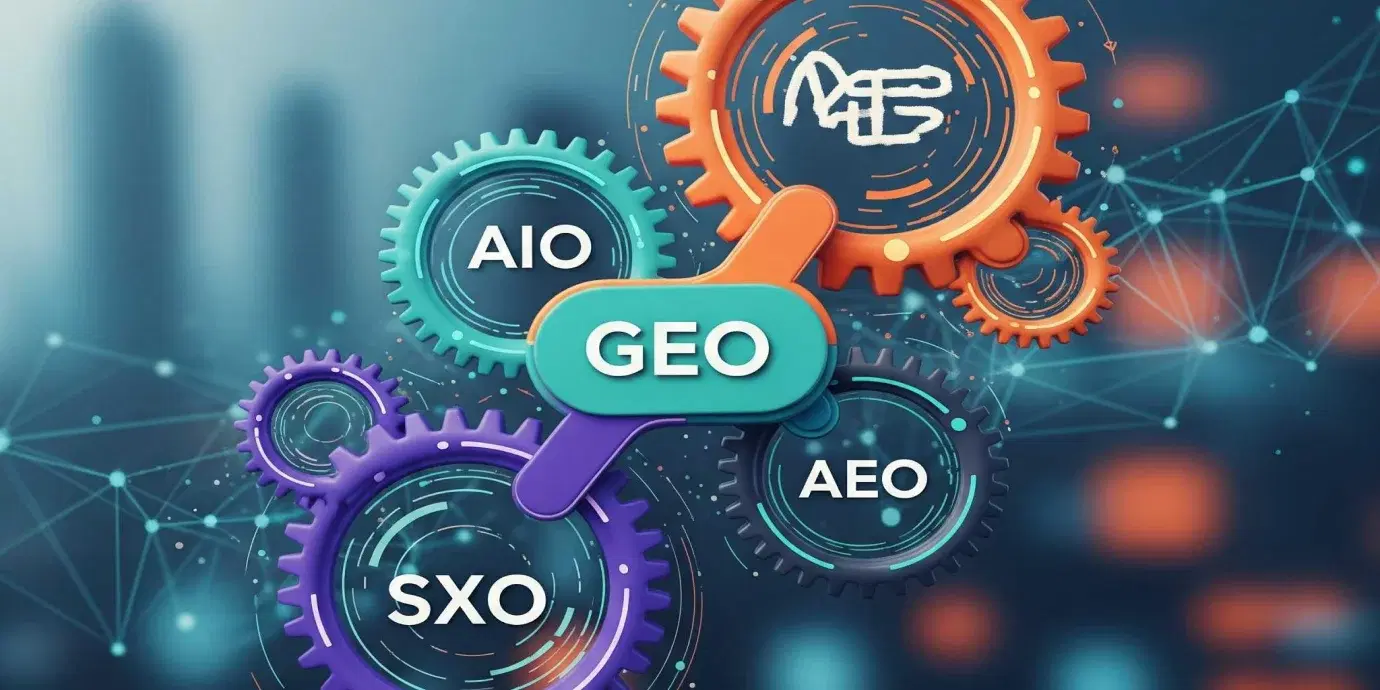
To succeed in this new era, businesses must move beyond outdated SEO tactics and adopt a smarter, integrated strategy. This includes aligning AIO GEO SXO concepts—AI Optimization (AIO), Generative Engine Optimization (GEO), Answer Engine Optimization (AEO), and Search Experience Optimization (SXO). Together, these approaches define the search optimization future, helping brands remain visible, credible, and competitive in AI-driven search ecosystems.
The traditional goal of simply “ranking” is also changing. Today, success is about being the answer or being referenced by machines, not just earning clicks. This means visibility now extends beyond blue links to authoritative mentions in AI-generated responses—fundamentally redefining how businesses measure SEO success and plan their content strategies.
Understanding the New SEO Terms
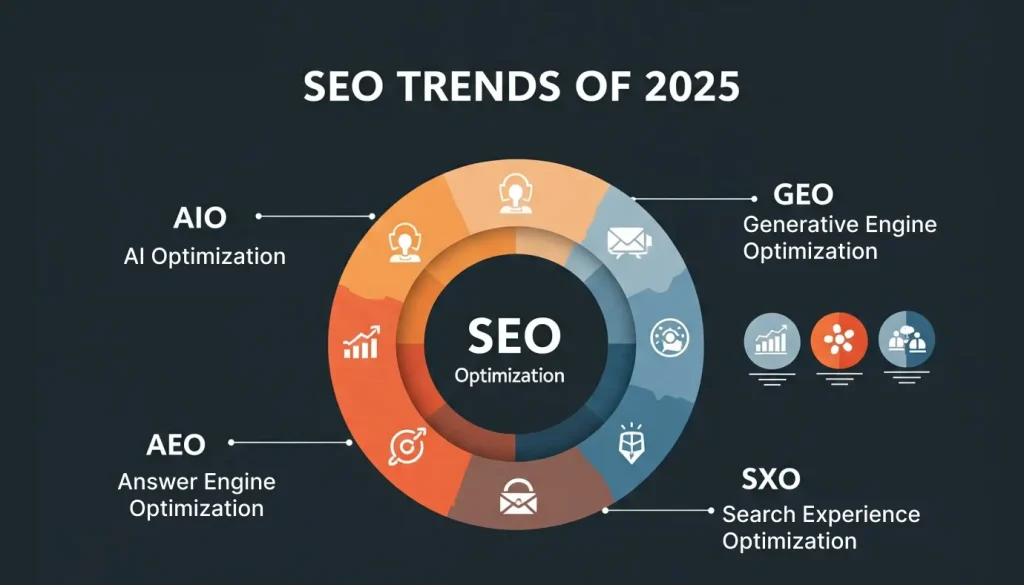
Let’s break down these new terms to see how they fit into the future of SEO.
AIO: AI Optimization
Making your website’s content simple for AI-driven search engines to comprehend and summarize is the main goal of AI Optimization (AIO). Consider it a way to make your material “machine-readable.” Google’s AI Overviews, which provide instant responses directly on the search page, are expanding. This suggests that fewer people might visit your website. However, Google is making these AI Overviews more link-rich, so even if your website is small, it will still be seen. Getting your brand recognized and highlighted in these AI summaries is now the primary goal, rather than simply generating clicks.
GEO: Generative Engine Optimization
Generative Engine Optimization (GEO) is all about creating your content in such a high quality that AI tools like Google’s Search Generative Experience (SGE) prefer to use it when they generate their answers. It’s all about being the go-to source that AI quotes or mentions. Unlike classical SEO, which desires a click, GEO desires your content to be “the answer” itself. This is to say that your content must be extremely clear, credible, and display actual expertise. AI adores unique insights, original research, and facts that it simply can’t manufacture on its own.
AEO: Answer Engine Optimization
Answer Engine Optimization (AEO) focuses on making your content give direct, short answers to people’s questions. This helps your content show up in “featured snippets” (those quick answer boxes at the top of Google), “People Also Ask” sections, and especially in voice search results. With devices like Alexa and Siri, people get spoken answers without seeing website links. So, being the main source for an answer engine not only makes you more visible but also shows your brand as a trusted expert. AEO means using natural language and answering questions directly, often in a Q&A style.
SXO: Search Experience Optimization
Search Experience Optimization (SXO) involves marrying traditional SEO with the way users really behave on your site (User Experience or UX). Its primary purpose is ensuring that after finding your site, users have an easy, quick, and pleasant time. If your website is slow to load or difficult to navigate on mobile, users will leave quickly, regardless of your search ranking. SXO ensures your site is engaging and user-friendly, helping to keep visitors and encouraging actions like sign-ups and purchases.
How They Work Together for Maximum Impact
The real power of these four strategies lies in their combined use. They are not separate ideas; they work hand-in-hand to make each other stronger.
- AIO lays the groundwork by making your content easy for AI to understand.
- Then, GEO uses that understanding to get your content mentioned and quoted by AI.
- AEO builds on this by making your content appear as direct answers in search results and voice searches.
- Finally, SXO ensures that when people visit your site, they have a great experience, which encourages them to stay and convert.
This creates a positive cycle: good content that AI understands leads to more mentions, which leads to more direct answers, and a great website experience keeps people happy and coming back. This combined approach helps your brand be seen and trusted everywhere online, not just in traditional search results.
Simple Steps to Get Started
To use these strategies, focus on quality, what users want, and a good technical setup:
- Create Great Content:
- Be an Expert: Show your experience, knowledge, and trustworthiness. Mention your sources and have real experts write your content.
- Keep it Clear and Short: Structure your content with clear headings, bullet points, and Q&A sections so AI can easily pull out answers.
- Use Schema Markup: This is like giving AI a map of your content, helping it understand what your page is about.
- Think Like a Human: Use natural, conversational language, especially for voice search.
- Make Your Website Fast and Easy to Use:
- Speed Matters: Make sure your website loads super fast on all devices, especially phones.
- Easy to Navigate: Design your website so people can easily find what they’re looking for.
- Engaging Visuals: Use good images, videos, and charts to make your content more interesting.
- Build Trust and Authority:
- Become a Go-To Source: Create lots of detailed content on your topic to show you’re an expert.
- Get Good Links: Get links from other trusted websites.
- Local SEO: If you have a physical business, make sure your Google Business Profile is updated and get local reviews.
Looking Ahead
The world of SEO is always changing, but human expertise is still key. AI tools can help with research and content ideas, but real creativity, unique ideas, and building trust still come from people. The future of SEO is exciting, and by embracing these new, connected strategies, your business can stay ahead and truly shine online.
Not sure which approach is right for your project?
We've built both. We'll tell you honestly which one fits.
From no-code MVPs validated in 6 weeks to enterprise AI platforms with 50,000+ users, we've built across the whole range. Book a consultation and we'll tell you honestly which approach fits your budget, your timeline, and your scale ambitions.
Book a discovery call