How Business Analysts Keep Projects on Track When Requirements Shift

Listen to this article
In Agile development, one truth always holds—change is constant. Businesses evolve as user requirements continuously shift. While these changes often add value, the business analyst role is critical in ensuring they don’t destabilize the project. Business Analysts act like a compass, guiding teams so that evolving needs stay aligned with the existing system and long-term goals through effective changing requirements management.
Early in my career, I worked on Ellomed, an Electronic Health Records (EHR) system designed to help clinics and doctors manage appointments and schedules. What began as a simple idea quickly expanded. With Agile in practice, changing requirements surfaced from the start. The challenge wasn’t whether change would happen, but how to manage it effectively—always with the goal of delivering a high-quality product.
Building a Solid Foundation
In ElloMed, the first move was to establish a non-negotiable basis, the features that would not be affected by anything.
This anchor made certain that the core will not shake in case of later additions of improvements or even new modules. By obtaining this base, we gained flexibility, but not stability through out the process.
Fact: In Agile projects, a solid base minimises the rework whereby core modules are not redesigned each time there is a requirement change. The whole point in agile is about flexibility to modify the system as per the frequent requirements.
Pharmacy Energizing
One of the biggest changes occurred when there was the integration of pharmacy. It appeared to be another feature at first sight. However, my study found out that there were more serious problems with the current pharmacy systems:

- Inventory was to be checked by manually checking the medicines and other items.
- Out of date products were not marked automatically that indicates lack of expiry management
- Interfaces were not user friendly and looked out dated.
In the case of BAs, the issue at hand was to transform a general request, such as make pharmacy easy to manage, into specific and practical requirements.
Our Approach:
- Gap Analysis- Uncovered inefficiencies in existing systems.
- Competitor Research- Research on tools available of strengths and weaknesses.
- User-Centered design- What pharmacists and staff really needed that can help in making the pharmacy management easier.
The Solution:
We introduced a full-fledged and user-friendly interface designed specifically for pharmacists- one that covered every loophole we had identified during analysis phase.
- Efficient expiry management with automatic alerts and red highlights for expired products
- Managed inventory and order controls that minimized effort and errors.
- An intuitive design that made day-to-day tasks quicker, simpler and far more efficient.
What seemed like a dramatic requirement shift didn’t create disruption because the foundation of ElloMed was already strong, this enhancement only elevated the system transforming it into a tool that was not just functional but genuinely easy and efficient for users.
How BAs Maintain the timelines of projects in case of requirements shifts
ElloMed showed that requirement changes do not necessarily cause consternation. BAs will be in a position to facilitate smooth transitions, with the correct practices that are considered from the very starting of the project.
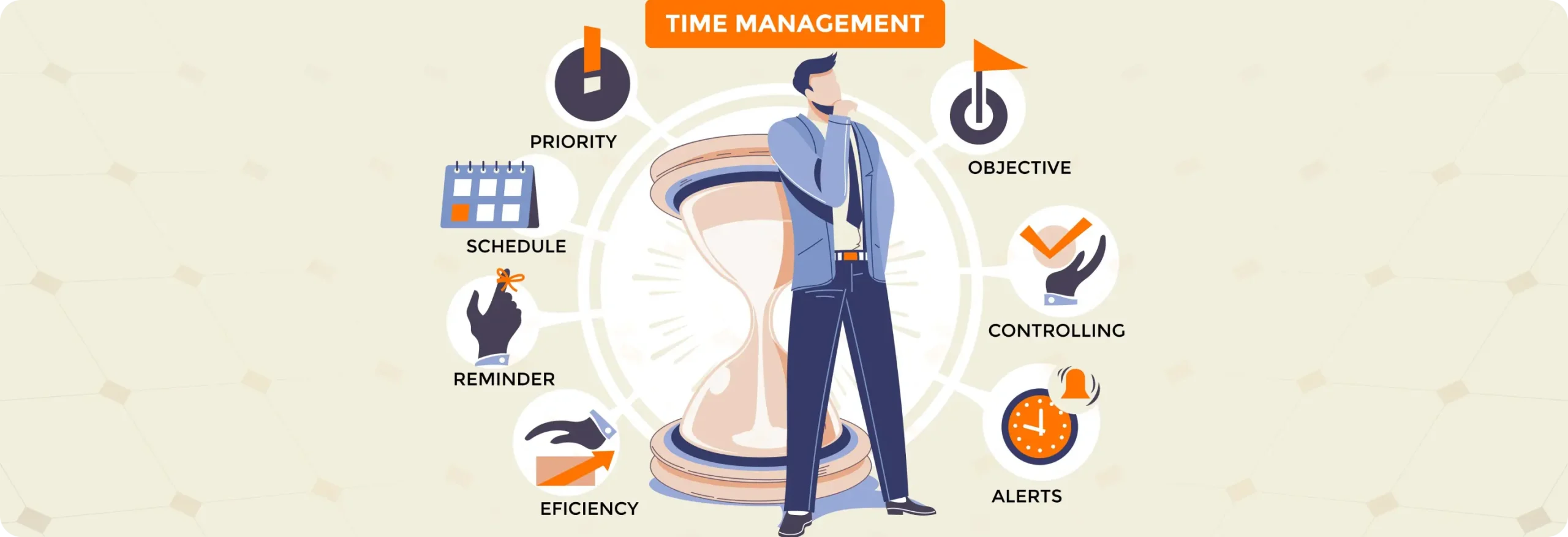
Here’s how:
- Priorities: Segregate the requirements based on must-haves” vs “nice-to-haves” early on.
- Impact Assessment: This is categorized as an evaluation of the impact of a new change on existing modules before development commences in order to make sure that every new requirement aligns with the existing system and does not break the ongoing flow.
- Documentation: Have a clear record of all requirements, the reason behind its change and the person that authorized the change. This way we can track the record of frequent requirement change.
- Prototyping: Prototyping allows you to check the ideas first by using quick wireframes before starting to design and code them. This is one of the most time saving processes.
- Requirement Alignment: Frequent sprint reviews and requirement check-ins ensure that all are on track. Here, communication is the key to ensure that everyone on the team is on the same page of understanding.
Smart Tips for Agile BAs
The thing is that in Agile it is not only about the process but it is about the way of thinking. Handling dynamic requirements is like sailing in a changing wind; you cannot control the wind, but you can move the sails. A few tips that I found helpful are:
- Sort wheat and chaff apart → Figure out the must-have and nice-to-have list early in life.
- Keep the pulse alive → Have a living history of changes and business value.
- Big bites, small impact → Dividend large requirements into smaller deliverable units.
- Three heads are more than one → Rapidly converge to Three Amigos strategy (BA + Dev + QA).
- Trace back to purpose → It is always important to have changes being linked to the larger business objective.
Lessons from Ellomed
Ellomed was not only a project but more of an Agile classroom. Here’s what it taught me:
- The magic ingredients are patience → Agile succeeds where you allow flexibility of its time. The presence of strong roots, the constant growth, therefore, results in the minimization of chaos in case of the change in requirements.
- Clarity is power → Divide the amorphous thoughts into clear, testable, implementable solutions.
- Make lemons into lemonade → Requirement shifts but the embraced requirement shifts can make the product even stronger.
Conclusion
Requirement changes are not a roadblock in Agile, rather a detour that can get to the destination provided that they are managed properly. It is the way the wheel is turned by BAs.
Business Analysts are the stabilizers of the ship- when there are alterations in directions they are the people who see to it that the project does not head in the wrong direction.
The ideal example is Ellomed: initially a functional scheduling program, it has developed into a highly reputed EHR that has smart pharmacy integration. This was because requirements changes were not feared but leveraged.
As it is said, the strongest or the smartest do not survive, but the most adaptable one. Having the appropriate BA practices such as building the foundation, prioritization and flexibility, the projects do not only remain on track but also emerge as solutions that count.
Facing shifting requirements in your Agile projects? Ellocent Labs expert Business Analysts specialize in impact assessments, prioritization frameworks, and prototyping strategies to keep your projects on track. Contact us today to ensure seamless project delivery.
Not sure which approach is right for your project?
We've built both. We'll tell you honestly which one fits.
From no-code MVPs validated in 6 weeks to enterprise AI platforms with 50,000+ users, we've built across the whole range. Book a consultation and we'll tell you honestly which approach fits your budget, your timeline, and your scale ambitions.
Book a discovery call